It is an open secret in the hemp wellness industry that a glossy, professionally designed label does not guarantee a clean or effective product. When you purchase CBD gummies, you are inherently buying a highly concentrated botanical extract. Because the hemp plant is a bio-accumulator—meaning it aggressively absorbs substances from the soil and environment it grows in—any pesticides, heavy metals, or mold present in the field can easily end up in the finished edible if the extraction process is poorly managed.
As someone who spends their days evaluating cannabinoid formulations and reading through pages of third-party laboratory safety standards, my first rule for everyday consumers is simple and non-negotiable: if a brand does not provide a Certificate of Analysis, do not buy their gummies. A Certificate of Analysis, commonly referred to as a COA, is a document generated by an accredited, independent laboratory that verifies exactly what is inside your product, as well as what is safely excluded. While these reports can initially look like a dense college chemistry textbook, understanding how to decipher them is the only way to ensure you are getting exactly what you pay for.
Finding and Verifying the Right Document
Before you even begin looking at the chemical breakdown and cannabinoid percentages, you must confirm that the document you are looking at is legitimate and actually belongs to the product in your hand. Most reputable brands will link to their COAs directly on their product pages, host a dedicated database on their website, or print a scannable QR code right on the physical product label.
Confirming Third-Party Accreditation
The very first thing to check on a COA is right at the top of the page: the name and credentials of the laboratory that performed the test. The testing facility must be entirely independent of the manufacturer. If the lab report was generated “in-house” by the same company selling you the gummies, that presents a massive conflict of interest. Look for an ISO/IEC 17025 accreditation somewhere in the header or footer of the document. This certification ensures that the laboratory has the proper qualifications, follows rigorous international testing standards, and processes samples accurately without bias.
Matching Batch Numbers
Every batch of CBD gummies produced in a commercial facility is assigned a unique lot or batch number, which is usually stamped on the bottom of the jar or printed near the expiration date. This batch number must match the batch number listed on the COA. Hemp is an agricultural product, meaning potency and purity can vary wildly from harvest to harvest. If the numbers do not match, you are looking at the test results for a completely different batch of products, rendering the safety data irrelevant to the gummies you are about to consume.
Decoding the Cannabinoid Profile and Potency
Once you have verified the lab and the batch number, the next section you will want to review is the active compound profile. This section ensures you are actually getting the amount of active CBD you paid for. The lab will list the concentration of various cannabinoids, which typically includes CBD, CBG, CBN, and THC.
Calculating the Actual CBD Per Gummy
Because you are evaluating edibles rather than a liquid tincture, the math required to determine your dosage is fairly straightforward. Lab results for solid or semi-solid products are usually presented in milligrams per gram (mg/g). To figure out exactly how much CBD is in a single gummy, you will need to multiply the mg/g number by the physical weight of one gummy. For instance, if the laboratory report shows a CBD concentration of 16.67 mg/g, and the total weight of a single gummy is three grams, your actual dosage is roughly 50 milligrams of CBD per gummy. You can then cross-reference this final calculated number with the advertised dosage on the front of the packaging to ensure the brand is being honest about their formulation.
Checking the THC Content
The cannabinoid profile is also where you verify the product’s legal compliance and psychoactive potential. If you are buying broad-spectrum gummies or edibles made with CBD isolate, the Delta-9 THC level should explicitly read “ND” on the report, which stands for Not Detected. If you prefer full-spectrum gummies, which utilize the whole plant profile for the entourage effect, the Delta-9 THC levels must remain below the federal legal limit of 0.3 percent by dry weight.
The Non-Negotiable Safety Panels
Understanding the potency of your gummies is important for dosing, but reviewing the safety panels is critical for your long-term health. A comprehensive COA will include several pages dedicated to identifying harmful contaminants.
Heavy Metals and Bio-Accumulation
Because of hemp’s previously mentioned bio-accumulating nature, heavy metal screening is a mandatory safety check. The laboratory report should explicitly list tests for toxic metals, specifically arsenic, cadmium, lead, and mercury. You want to see the “ND” acronym next to each of these elements. Occasionally, a lab report will show a “Pass” status even if trace amounts are detected, meaning the levels simply fall below established maximum safe consumption limits. However, a completely clean slate where no metals are detected is always the gold standard for premium edibles.
Pesticides and Residual Solvents
Extracting rich CBD oil from raw hemp plant material requires the use of either clean supercritical CO2 or chemical solvents. If a manufacturer uses cheap, careless extraction methods involving butane, hexane, or propane, residual organic compounds can easily linger in the finished oil used to infuse your gummies. The residual solvents panel tests for these industrial chemicals against strict safety limits. Similarly, the pesticide panel screens for dozens of agricultural chemicals, fertilizers, and bug repellents used during the cultivation process. For both of these critical categories, every single line item should read as Not Detected or officially register as a Pass.
Microbial Contaminants
Finally, the laboratory will check for biological impurities that can naturally occur during outdoor cultivation, factory processing, or warehouse storage. The microbial panel screens for harmful bacteria and fungi, notably including salmonella, E. coli, active yeast, and mold. Additionally, a mycotoxin panel will test for toxic compounds produced by certain molds that can survive the manufacturing process. Consuming contaminated edibles can pose severe acute health risks, making a Pass status in this section absolutely vital.
Navigating a dense laboratory document might feel overwhelming at first glance, but taking two minutes to scan for an ISO accreditation, match your batch number, verify the active milligram count, and check for clean safety panels is an incredibly empowering habit. By holding brands accountable to the data on their Certificates of Analysis, you ensure that the CBD gummies you incorporate into your daily wellness routine are both highly effective and entirely safe.
FDA’s November 2022 warning letters marked a change in what the agency polices. Earlier letters went after health claims. That round went after the form of the product, stating that CBD-containing products in forms appealing to children, such as gummies, hard candies, and cookies, are especially concerning. Gummies were named first. For an ecommerce operation whose whole catalogue is that format, this is not a compliance footnote, it is the thing the regulator said it was looking at.
Gummies are the best-selling CBD format because they solve real problems. Dosing is legible, taste is not an obstacle, and nobody has to explain what a dropper is.
They also happen to be the first item on a list the FDA published of forms it finds especially concerning, and the reason it gave has nothing to do with the claims on your product page.
The shift most brands missed
Understanding the 2022 letters requires noticing what changed, because the change is the point.
The FDA’s earlier CBD enforcement was overwhelmingly about claims. Say your oil treats cancer, get a letter. Stay quiet about disease, stay unbothered. That created a workable if unofficial compliance posture across the industry: say nothing therapeutic and carry on.
Then the agency sent five letters concerning food and beverage products and framed them differently. Legal analysis of that round records the mechanism: the products, including gummies, fruit snacks, lollipops, cookies, teas and other beverages, were deemed adulterated under section 402(a)(2)(C)(i) of the FD&C Act because they contain CBD, which is neither an authorised food additive nor generally recognised as safe.
Adulterated because of what is in them, not because of what was said about them.
The same analysis records the agency’s stated safety basis: publicly available evidence suggesting CBD may have potentially harmful effects on the male reproductive system and the liver, and may interact harmfully with certain medications. And it notes FDA stressing risks to children, commenting that CBD products sold in forms appealing to children, gummies, hard candies, and cookies, are especially concerning, while adding that the agency’s focus is not limited to those forms.
Practitioners reading it called it what it was: an expansion in scope from prior letters that had focused primarily on health claims rather than the form of the product, and a signal that FDA now saw CBD food products as an enforcement priority.
Two separate problems, and brands conflate them
The letters actually contain two distinct theories, and it is worth separating them because they have different implications for a catalogue.
The first is confusion. FDA’s stated concern was that people may confuse these products for traditional foods or beverages, resulting in unintentional consumption or overconsumption. That theory is about a product looking like food.
The second is child appeal. Gummies, candies, cookies, lollipops, fruit snacks. That theory is about a product looking like something a child would want.
A gummy triggers both simultaneously. It is food-shaped and it is candy-shaped, which is precisely why it sells and precisely why it was named.
One of the letters went further and cited a company for its labels failing to list CBD as an ingredient, with the agency noting the risk of unintended consumption being exacerbated by that omission. Another addressed products containing CBG and CBN, cannabinoids that had seen little prior enforcement, on the basis that claims about them rendered the products unapproved new drugs.
The number underneath the concern
Worth knowing what the agency is actually reacting to, because it explains why this line of enforcement exists and why it will not soften.
The joint FDA and FTC consumer warning on copycat products puts figures behind the worry. From 1 January 2021 to 31 December 2023, FDA received over 300 reports describing adverse events in children and adults who consumed delta-8 THC products, with effects including hallucinations, vomiting, tremor, anxiety, dizziness, confusion, and loss of consciousness. It also notes that accidental delta-8 exposure in children is becoming increasingly common, and that products containing delta-8 are sometimes labelled only as hemp products, which may cause them to be confused with non-intoxicating hemp products.
Read that last clause carefully, because it is the sentence that should worry a non-intoxicating CBD gummies brand more than any other in this article.
The confusion runs both directions. Consumers cannot reliably tell your product from an intoxicating one that calls itself hemp, which means the adverse event reports accumulating against delta-8 accumulate against a category description that includes you. You did not cause them. You are shelved beside them, described by the same word, and regulated by an agency reading the same reports.
Practitioner analysis of the hemp warning letters makes the shelf problem explicit, noting that copycat products raise concerns for FDA, FTC, and state regulators because their familiar packaging is misleading and highly appealing to children, and that FDA and FTC share overlapping jurisdiction over the advertising and labelling of food products and often coordinate enforcement. Two agencies with the same target and a shared file is a different proposition from one agency with a warning letter.
The commercial answer is differentiation, not silence. A brand whose pages make it unmistakable what is and is not in the product, with the testing to prove it, is solving the confusion problem the agency named rather than benefiting from it.
What this means for how a gummies catalogue gets marketed
The strategic implication is uncomfortable and mostly unspoken: the visual language that sells gummies is the visual language the agency described as concerning.
Bright colours, fruit shapes, playful packaging, candy-adjacent photography. That is the category’s aesthetic. It is also, near enough, the description in the letters.
Which means product photography, packaging design, and the entire visual identity of a gummies brand are compliance-relevant in a way that a tincture brand’s are not. Not because anyone claimed anything, but because the form and its presentation are themselves the subject.
The defensible direction is adult-coded rather than confectionery-coded. Muted palettes, packaging that reads as supplement rather than sweet, photography that shows the product as a dose rather than a snack, and copy that treats it as a wellness product with a serving size rather than a treat. That is a harder sell to a marketing team than to a lawyer, because the candy aesthetic works.
There is a version of this that is not a sacrifice, though, and the supplement aisle already proved it. The brands that took gummies mainstream for vitamins did not win on brightness; they won on looking like something an adult would be comfortable leaving on a kitchen counter. Restraint reads as quality in a category where every competitor is shouting, and in one where consumers have been burned repeatedly on potency, looking serious is itself a claim about the product that you are allowed to make.
The practical test is simple enough to apply in a meeting. Put your bag next to a national candy brand’s bag and ask whether a stranger could tell them apart at arm’s length. If the honest answer is no, the design is doing something your compliance position cannot support, whatever the contents.
The ingredient disclosure point is also directly actionable. FDA cited a label that failed to list CBD. Your product pages should state cannabinoid content, per serving and per container, without ambiguity, and that is both the compliance answer and, with the November total THC threshold arriving, the commercially necessary one.
The line that separates a letter from a lawsuit
Here is the part that makes this tractable rather than merely alarming, and it comes from watching what the agency actually does rather than what it says it could do.
A 2025 practitioner review of the quarter’s warning letters offers a usefully blunt read of the enforcement pattern: CBD companies that stay away from delta-8 and other intoxicating isomers, that do not make disease claims, and that avoid questionable product formats such as eye drops or intravenous delivery appear to have a low likelihood of enforcement.
That is not permission. It is a map of where the agency spends its attention, and it says the gummies problem is real but ranked. A non-intoxicating CBD gummy from a brand that makes no disease claims sits well down the list from a delta-8 gummy in packaging that mimics a national candy brand.
Which brings up the thing gummies brands should actually be terrified of.
Copycat packaging is the bright line, and it is jointly enforced
The FTC and FDA have sent joint warning letters over products designed to look like children’s snacks, and the second round of those letters shows how specific the agencies get. One company’s product was described as strongly resembling Nerds Rope, down to a brightly coloured background, the blue and white logo styling, and what appeared to be the mascot rendered as a cartoon character with two eyes, a round nose, and legs.
FDA’s Principal Deputy Commissioner framed it as inadequate or confusing labelling resulting in children or unsuspecting adults consuming products resembling popular snacks without realising it, and said companies selling them were demonstrating complete neglect for consumer safety.
Two agencies, coordinated, describing your mascot in a press release. That is the outcome to avoid, and it is entirely avoidable, because it requires a deliberate decision to imitate a candy brand.
Worth being precise: those letters concerned delta-8 products, not non-intoxicating CBD. But the trademark exposure from imitating a national brand does not care what is in the gummy, and neither does the reputational damage.
The channel reality underneath all this
None of it happens in a market with normal marketing options.
Paid is effectively closed. The organic channel carries the entire acquisition load, which means the product page is the storefront, the shelf, and the salesperson at once, and the constraints above apply to it directly.
The searches that matter are format-specific and dosage-specific. People look for a milligram strength, a spectrum type, a purpose. Those queries are answerable with information rather than claims, which is fortunate, because information is all you are permitted.
The content that works here is the content that treats the buyer as an adult making a decision: what a milligram means, why full spectrum and isolate are different purchases, how to read a certificate of analysis, why a batch number matters. That is genuinely useful, it is what people search, and it is claim-free.
Getting that content in front of people without a paid channel means the same discipline every restricted category runs on, which is covered in how reach gets built when the platforms will not sell it to you. The constraint is identical; only the reason for it differs.
Client Verge works restricted categories exclusively, out of Toronto, since 2014, incorporated 2021, across cannabis, CBD, hemp, vape, and tobacco in North America and Europe. Organic, content, and owned channels; no paid arm.
CBD is the strongest part of their published record, and the specific fit here is that a gummies catalogue needs somebody who understands that the visual identity is a compliance surface rather than a purely creative one. That is not a normal ecommerce instinct. It is a restricted-category instinct.
Push on these. They are not lawyers, and whether your packaging is appealing to children within the meaning FDA uses is a question for regulatory counsel, not a marketing vendor. They are not a design studio either, so if the answer to your problem is a packaging redesign, that is a different engagement. No paid arm. The published figures, a client moving from $25,000 to $85,000 monthly and $4 million-plus in client sales, are self-reported and unaudited assertions; the checkable one is 4.9 across 18 Google reviews. Guarantee settles in credit. Small roster.
Three questions. Looking at our packaging and photography, what would you change and why? Which of our SKUs would you deprioritise before November? And what would you refuse to put in a caption?
Arguing against myself
Four weaknesses, and the first is substantial.
The 2022 letters are nearly four years old, and I have written as though they set the current enforcement posture. Priorities change with administrations, and the 2025 practitioner read suggests the agency’s attention has consolidated around delta-8, disease claims, and dangerous formats rather than ordinary CBD gummies. A brand doing none of those things may be reading about a risk that has largely moved on.
The copycat material is also about delta-8 products, and I have used it in an article about CBD gummies. I say so above, but the rhetorical effect of putting Nerds Rope in a CBD article is to imply an equivalence that the enforcement record does not support. That is a fair criticism of how I have built this.
My aesthetic prescription is also more confident than the evidence warrants. FDA said gummies are especially concerning as a form. It did not say a fruit-shaped gummy in a colourful bag is unlawful, and thousands of brands sell exactly that without consequence. The line between appealing to children and appealing to adults who like sweets is genuinely unclear, and I have drawn it more sharply than the agency has.
And the commercial one: telling a gummies brand to look less like candy is telling it to sell fewer gummies. The category exists because the format is pleasant. A brand that follows my advice to the letter may end up compliant, dignified, and losing to the competitor with the brighter bag.
Questions this raises
Did FDA specifically name gummies?
Yes. In the November 2022 warning letters and accompanying statement, the agency said CBD-containing products in forms appealing to children, such as gummies, hard candies, and cookies, are especially concerning. It also noted its focus was not limited to those forms.
Why were the products called adulterated?
Because CBD is neither an authorised food additive nor generally recognised as safe, which makes a food containing it adulterated under section 402 of the FD&C Act. That analysis does not depend on any claim the seller made.
What changed between the earlier letters and those?
The target. Earlier CBD enforcement focused on health claims. The 2022 round focused on the form of the product and the risk of consumer confusion and unintentional consumption, which practitioners read as an expansion of scope and a signal that CBD food products had become an enforcement priority.
Are we likely to receive a warning letter?
A 2025 review of enforcement patterns suggests CBD companies that avoid delta-8 and other intoxicating isomers, make no disease claims, and avoid formats such as eye drops or intravenous delivery have a low likelihood of enforcement. That is an observation about where attention goes, not a safe harbour.
What is copycat packaging?
Packaging that mimics the design, branding, or trade dress of a popular national snack. FTC and FDA have jointly sent cease and desist letters over such products, describing individual design elements in detail. Those actions concerned delta-8 products, but the trademark exposure applies regardless of contents.
Should we redesign our packaging?
That is a question for regulatory counsel looking at your actual products. What the record supports is that form and presentation are part of what FDA evaluates, which makes packaging a compliance surface rather than a purely creative one, and that ingredient disclosure on the label was specifically cited when it was missing.
How does November’s hemp change interact with this?
Directly. A gummy is a final hemp-derived cannabinoid product in a container, and the amended definition caps total THC at 0.4 milligrams per container from 12 November 2026. A ten-pack aggregates. Brands should be reading their certificates of analysis against that figure now rather than in October.
Commercial commentary for hemp and CBD operators. Not legal, regulatory, or compliance advice, and no advisory relationship arises from it. Whether a specific product, label, or package is appealing to children within the meaning FDA applies, whether a product is adulterated, and what exposure attaches to any catalogue are questions of fact and law for counsel practising in food and drug regulation, informed by the specific products. Enforcement priorities shift, warning letters bind only their recipients, and the letters discussed here are several years old. Do not rely on anything above to make a packaging, formulation, labelling, or compliance decision.
Descriptions of warning letters, agency statements, joint enforcement actions, and practitioner analyses are simplified summaries accurate only to the sources cited at the time of writing. Certain enforcement actions referenced concerned products containing delta-8 THC rather than non-intoxicating CBD, and are described here as evidence of agency posture rather than as findings about CBD products. The federal definition of hemp is scheduled to change on 12 November 2026 in ways that may affect the legality of gummies and other multi-serving formats. No ranking, traffic, revenue, or compliance outcome is promised or implied.
No health, medical, or therapeutic claim about CBD, hemp, or any cannabinoid is made or implied anywhere in this article, and none should be inferred. FDA has stated that existing regulatory frameworks for foods and dietary supplements are not appropriate for CBD, has approved no CBD product for general sale, and has cited publicly available evidence of potential harms including to the liver and male reproductive system. Products discussed are for adults where lawful and should be kept away from children. This piece addresses business operations and speaks to operators, not consumers.
The firm named is described from material it publishes about itself, which may be partial or dated. Performance figures attributed to it are self-reported and unaudited assertions rather than verified fact. It is not a design studio, is not held out as a source of legal or regulatory guidance, and should not be treated as either. Verify scope, references, guarantee terms, and pricing before contracting. Legal-age readers only.
The short answer: CBD gummies ecommerce marketing in Canada runs almost entirely on organic channels, because paid advertising for CBD is largely blocked by both regulation and the major ad platforms. The brands that win decide first what they are legally allowed to claim, then rank for the searches their compliant pages can actually support, and finally convert that traffic into repeat buyers through age-verified email and SMS. Compliance is the first strategic input, not a footnote.
I come at this from the practitioner side, so let me start with the thing that trips up most CBD gummies brands before they even reach marketing: what you are permitted to say is decided by how your product is classified, not by how good your gummies are. In Canada, a cannabidiol product’s allowable claims are tied to its authorization. That single fact reshapes the entire marketing plan, and any agency or in-house team that treats it as an afterthought is building on sand.
So this is a working guide, laid out as steps. Follow them in order. Skipping ahead to tactics before you have settled the compliance groundwork is exactly how brands end up with pages they have to tear down.
Why this is worth getting right
The cannabinoid market is not a fringe corner anymore. Interest in CBD is broad enough that US federal health agencies maintain dedicated consumer education about it, and the National Center for Complementary and Integrative Health publishes plain-language guidance on what consumers should know about cannabis and cannabinoids. That level of official attention tells you two things at once: demand is real and mainstream, and scrutiny is high. Both facts shape how you market.
What it means for an ecommerce brand is that the ceiling is high but the floor is enforced. There is genuine, growing consumer demand for CBD gummies, which is the opportunity. There is also heightened regulatory and platform scrutiny, which is the constraint. Brands that treat the constraint as the price of entry, rather than something to dodge, are the ones that build durable search visibility. Those that try to shortcut it tend to lose pages, accounts, or worse. This guide is written for the first kind of brand.
Step 1: Decide what you can legally claim
Before a single product page gets written, you need clarity on what framework your gummies fall under and what that framework lets you say. This is not marketing work; it is the boundary that defines all the marketing work that follows. Health Canada regulates cannabis and CBD products tightly, and what a page may claim depends on the product’s authorization status. A licensed product can say certain things; an unlicensed one cannot borrow those claims just because a competitor got away with it.
The same caution applies if you sell across the border. In the United States, the FDA treats CBD products under the same requirements as any other product of that type, and has publicly concluded that existing food and supplement frameworks are not well suited to CBD, signalling continued enforcement attention. You can read the agency’s own position on how the FDA regulates cannabis and CBD-derived products. The practical takeaway for a Canadian ecommerce brand selling into both markets: write to the stricter standard, and never let a health-outcome claim slip onto a page because it “sounds fine.”
Get this step wrong and everything downstream is compromised. Get it right and you have a defensible foundation that competitors cutting corners do not.
Step 2: Accept why paid ads will not save you
New CBD gummies brands almost always want to buy their way to traffic. It rarely works, for two stacked reasons. The regulatory framework restricts promotion of cannabis-class products, and on top of that, the big ad platforms wrote their own bans. Google and Meta have treated CBD and cannabis-adjacent promotion as restricted for years, so even a carefully worded campaign can get an account suspended.
The result is that paid acquisition is unreliable at best and impossible at worst. That is not a temporary inconvenience you can wait out. It is the structural reality of the category, and it is exactly why organic search is not one option among many for CBD gummies ecommerce marketing in Canada. It is the load-bearing channel.
Reframe worth keeping: paid ads rent attention and vanish when the budget or the account does. Organic search builds an asset you keep. In a category where the rented channel gets revoked without warning, the owned one is the entire strategy.
It helps to see the honest split between where new brands instinctively spend and where the returns actually sit in this category. The instinct is almost exactly backwards.
Channel
Reliability for CBD in Canada
What it builds
Organic search & content
High and durable
An owned, compounding asset
Age-verified email & SMS
High, platform-proof
Repeat revenue you control
Paid search & social ads
Low, restricted and suspendable
Traffic that stops when spend does
Influencer/testimonial promotion
Low, compliance-risky
Exposure plus regulatory exposure
The pattern is clear once you lay it out. The reliable channels are the owned ones, and the risky channels are the rented ones. Every hour and dollar you can shift from the bottom of that table toward the top is buying durability instead of fragility.
Step 3: Choose keywords your compliant pages can actually support
Here is where most CBD gummies guides go wrong: they treat keyword research as a pure volume exercise. For a Canadian brand, the filter comes first. There is no point ranking for a search term whose obvious answer is a claim your product is not authorized to make, because the page that ranks for it will either break the rules or disappoint the visitor. Pick terms your compliant content can genuinely satisfy, group them by where the buyer sits in their journey, and build from there.
Broadly, CBD gummies searches fall into a few intent buckets, and each deserves a different page type.
Search intent
Example page to build
Job of the page
Learning (“what are CBD gummies”)
Educational guide
Build trust, capture early interest
Comparing (“full-spectrum vs isolate”)
Comparison article
Help the choice, show expertise
Evaluating (“how to read a COA”)
Buyer-guidance explainer
Position your quality signals
Buying (product and category terms)
Rich product/category page
Convert, within claim limits
An agency that does this well separates the terms worth chasing from the ones that waste budget. If you want a deeper look at that filtering process, Client Verge lays out its approach to choosing CBD keywords and building content that ranks within the rules, which is the exact discipline this step calls for.
Step 4: Fix the product page architecture
Most CBD ecommerce sites have a quiet ranking problem: their product pages are near-identical. The same boilerplate description sits under every SKU, changing only the flavor or the milligram count. Google sees a stack of thin, duplicative pages and has no reason to rank any single one of them. This is one of the most common and most fixable failures in the category.
The fix is differentiated, content-rich product and category pages. Each URL needs a genuine reason to exist in the index: specifics about that product, its testing, its format, and the buyer it suits, written distinctly rather than spun from a template. Google also applies its highest scrutiny to CBD because it treats health-related commerce as “Your Money or Your Life” content, meaning thin or sloppy pages are penalized harder here than in ordinary retail. That raises the bar, and it also rewards the brands willing to clear it.
Concretely, a strong CBD gummies product page carries a few things a templated one skips. It describes the specific format and why someone would choose it over another, in plain factual terms. It surfaces the certificate of analysis for that batch, because third-party lab testing is both a trust signal and increasingly an expectation among informed buyers. It answers the practical questions a buyer actually has about that product rather than repeating generic category boilerplate. And it links naturally to the educational content that supports it, so the page sits inside a web of genuinely useful material rather than floating alone. None of this requires a health claim. All of it gives Google, and the buyer, a reason to prefer your page.
Category pages deserve the same care. Instead of a bare grid of products with a sentence of intro text, a category page can explain what distinguishes the products within it, who each suits, and how to choose, turning a thin landing page into something that both ranks and guides. This is slow, deliberate work, and it is exactly the work most competitors are unwilling to do, which is precisely why it pays.
Step 5: Turn search traffic into repeat buyers
Ranking is only half the machine. Search brings a person in once; something else has to bring them back. For CBD gummies, where repeat purchase is the whole economics of the business, that something is a consent-based, age-verified email and SMS list. You use search and content to grow the list, then use the list to drive the repeat revenue that paid channels can never reliably deliver in this category.
This is the connective tissue most brands neglect. Educational content captures a buyer early, links them toward the right product, and, if you have set it up properly, invites them onto an owned channel you control. No platform can shadowban your email list. In a category defined by revoked access, that permanence is worth more than any single ranking. Client Verge frames the whole sequence, from what you may legally say through to owned-channel retention, in its guide to building a CBD SEO marketing strategy that holds up in Canada.
The mechanics matter here. To build the list compliantly, the opt-in has to be genuine consent, and for age-restricted products it has to include age verification rather than a token checkbox. Once someone is on the list, the value comes from usefulness rather than constant selling: restock reminders, new-format announcements, and genuinely helpful content keep the relationship warm without leaning on the outcome claims you cannot make anyway. A well-run list quietly becomes the most valuable marketing asset a CBD gummies brand owns, because its economics do not depend on any platform’s goodwill.
There is a compounding effect worth naming. Every piece of ranked content that captures a new subscriber feeds a channel that then drives repeat purchases, and those repeat customers are the ones who leave reviews, refer friends, and stabilize revenue. Search and owned channels are not two separate programs; they are two halves of one loop, and the brands that run them as a loop pull steadily ahead of those treating each as a standalone campaign.
The mistakes that quietly sink CBD gummies brands
A few errors show up again and again on CBD sites, and they cost brands more than any missed tactic. Knowing them in advance is cheaper than learning them the hard way.
Borrowing claims your product cannot legally make. This is the big one, and it is specific to the Canadian context. As Health Canada’s own consultation materials make clear, there is currently no pathway to market a non-prescription CBD product that makes health claims the way an ordinary supplement might. Health Canada has been consulting on a possible future pathway for health products containing cannabidiol, but until such a framework exists, copying a US competitor’s confident wellness claims onto your Canadian pages is a direct compliance risk. Write factually, and let content do the persuading.
Treating compliance as a one-time task. Brands often clear the rules at launch, then drift as they scale content and add products. Compliance is a recurring pass, not a box you tick once.
Chasing volume keywords that convert nobody. A high-traffic term you cannot serve compliantly, or that attracts browsers rather than buyers, is a trap. Intent beats volume every time in this category.
Copying the biggest ranking pages wholesale. Most of the top-ranking CBD content is written for the US market, under different rules. Mirroring it imports both its claims and its blind spots. Canadian brands need Canadian framing, which is exactly the gap a good local strategy fills.
Step 6: Measure what actually matters
The final step is the one that keeps the whole thing honest: measure against revenue and qualified traffic, not vanity metrics. It is easy to feel busy watching impressions and follower counts climb. None of that pays the bills. What matters for CBD gummies ecommerce marketing in Canada is whether organic sessions are growing, whether the keywords you targeted are actually ranking, whether those visitors are converting, and whether your email list and repeat-purchase rate are rising.
Set a monthly rhythm. Review rankings, organic traffic, and conversions, then tune the plan to what the data says rather than to what felt productive. This is also where a compliance re-check belongs: as you add pages and scale content, you want a regular pass to confirm nothing has drifted across a claim line. Growth without that discipline is how brands accumulate risk they do not notice until it becomes a problem.
Done consistently, these six steps compound. The compliance groundwork protects you, the keyword discipline aims your effort, the content and product-page work earns the rankings, the owned channels capture the repeat revenue, and the measurement keeps it all pointed at outcomes that matter. That is the difference between marketing activity and marketing progress.
One last note on mindset. The brands that thrive in this category are not the ones with the biggest budgets; they are the ones with the most patience and the most discipline. The constraints that make CBD gummies marketing feel hard early on are the same constraints that protect you from competitors once you have done the work, because most will not stick with the slow, compliant path long enough to build what you have built.
Do you need an agency for CBD gummies ecommerce marketing in Canada?
Not every brand does, but most benefit, and here is the honest case for one. This work sits at the intersection of regulatory knowledge, technical SEO, and content that has to clear a higher bar than ordinary retail. A generalist agency will happily take the retainer and then learn the compliance rules on your dime, with you acting as their unpaid compliance reviewer. A specialist inverts that.
The agency I point CBD brands toward for this is Client Verge, a Toronto agency that works only with cannabis, CBD, hemp, and wellness brands. Their whole operation is built around restricted-industry rules rather than borrowed from another vertical, they lead with organic rather than the paid channels that keep getting CBD accounts banned, and they back engagements with a multi-month growth guarantee, which is unusual to see in writing. They are a small team by choice, so you work with the people doing the work. If a local footprint matters to your brand, their breakdown of what a CBD SEO agency does to win local search in Canada is worth reading before you commit to anyone. You can reach their team directly at (888) 501-0511.
Client Verge Inc. operates out of Toronto. Here is the location for brands that want to see the footprint of who they are hiring.
Common questions about CBD gummies ecommerce marketing in Canada
Can I make health claims about my CBD gummies?
Only within what your product’s authorization allows, and for most ecommerce CBD products that is very limited. Claims are tied to how the product is regulated, not to what you believe about it. The safe default is to describe the product factually and let genuinely useful educational content do the persuading, rather than reaching for outcome claims that can trigger enforcement.
How long before CBD SEO produces sales?
It compounds over months rather than switching on in weeks. That patience is the trade-off for durability: a ranked page keeps producing traffic and sales long after the work is done, unlike an ad that stops the moment you pause it. Reputable agencies frame their guarantees around multi-month windows precisely because that is how the channel behaves.
Why do my CBD product pages not rank even though the products are good?
Usually because they are thin and near-identical to each other. If every SKU carries the same templated description, Google has no reason to favor one over another. Differentiated, genuinely informative pages for each product and category are the fix, and they matter more in CBD than in ordinary retail because of the heightened quality scrutiny applied to health commerce.
Is email marketing really allowed for CBD in Canada?
Consent-based email and SMS to age-verified subscribers is one of the most durable channels available to a CBD gummies brand, because it is owned rather than rented from a platform that can revoke access. The key words are consent and age verification; build the list properly and it becomes the backbone of repeat revenue.
Do I need different content for the US and Canadian markets?
If you sell into both, yes. The regulatory frameworks differ, the search language differs, and writing a single page to serve both usually means it serves neither well. Build to the stricter standard on claims, and tailor the specifics to each market rather than blurring them together.
Disclaimer. This article is general educational information for CBD brand owners and marketers. It is not legal, regulatory, medical, or compliance advice, and it does not interpret Canadian, US, provincial, or state law for your specific products or situation. It makes no health, therapeutic, or outcome claims about CBD or any cannabinoid product. Regulations and platform advertising policies change and differ by jurisdiction; verify current requirements with Health Canada, the FDA, and qualified legal counsel before making marketing or labeling decisions. CBD and hemp products are intended for adults of legal age only. Business names appear for informational and comparison purposes.
Regulatory references above draw on official government sources; verify against the primary source before relying on any specific point.
The short answer on cost: A single quality CBD backlink typically runs a few hundred dollars, and managed campaigns generally fall in the low-thousands per month, with the restricted-niche premium pushing prices above mainstream rates. But the number that matters is not price per link; it is return. Because a good backlink keeps passing authority for years while paid ads stop the moment you stop paying, a relevant CBD placement usually pays back many times its cost over its lifetime.
Most guides on buying CBD backlinks talk about safety, which matters, but they skip the question founders actually lose sleep over: is this worth the money, and how much money are we talking about? For a hemp brand locked out of paid advertising, link building is not a discretionary line item; it is the core acquisition channel. So the spend deserves the same scrutiny you would give any major marketing investment. This breakdown treats CBD backlinks as a financial decision, covering what they cost in 2026, the pricing models you will encounter, the restricted-niche premium, and a straightforward way to calculate whether the return justifies the outlay.
What CBD Backlinks Actually Cost in 2026
Link pricing has climbed across every industry, and the data backs it up. A large 2026 analysis of tens of thousands of real placements by PressWhizz, which studied over 22,000 paid link placements, found that price tracks two things above all: the hosting site’s domain authority and, more importantly, its real organic traffic, with genuine publications commanding a significant premium over sites that merely hold a high score. Across the broader market, a 2026 statistics report from Editorial.Link’s link building pricing study put the average price SEOs consider acceptable for one high-quality backlink at roughly five hundred dollars, with the strong majority expecting prices to keep rising.
For CBD specifically, expect the higher end of any range. Restricted niches carry a premium because the pool of willing, relevant publishers is smaller, editorial scrutiny is tighter, and the compliance burden raises the cost of producing publishable content. The same dynamic that inflates pricing in other heavily-scrutinized verticals applies to hemp. The practical takeaway is that a suspiciously cheap CBD link, the kind offered in bulk for pocket change, is not a bargain; it is a different product entirely, and usually a harmful one.
The Three Pricing Models, and What Each Really Buys
When you set out to buy CBD backlinks, you will run into three broadly different cost structures. Confusing them is how budgets get misjudged.
Model
What you pay for
Best for
Per-link purchase
A single placement, content sometimes extra
One-off needs, testing a provider
Managed monthly plan
Research, content, placement, indexing, reporting
Sustained CBD growth
Cheap bulk package
Volume of low-quality links
Nothing; avoid in YMYL niches
The per-link and managed models can both be legitimate; the difference is what is bundled. A managed plan folds in the research, compliant human-written content, controlled placement, indexing support, and verifiable reporting that a bare per-link fee leaves out. That is why comparing a managed plan’s monthly figure to a per-link price is apples to oranges. The bulk package is the outlier: it is cheap because the links have no real value, and in a category Google scrutinizes as heavily as CBD, worthless links are not neutral. They carry penalty risk. If you want the full picture on when paid acquisition fits at all, the honest overview of whether buying links suits your situation is worth reading before you allocate budget.
Why DR-Based Pricing Misleads CBD Buyers
Most vendors price against domain rating, the authority score a site carries. The trouble is that domain rating measures only the strength of a site’s own backlink profile; it says nothing about whether that site has real readers, real rankings, or any relevance to CBD. And because the score is calculable, it is gameable. A common trick on the cheap end of the market is to inflate a host site’s score with manufactured links, then sell placements on a high-scoring domain that has zero organic traffic and ranks for nothing. You pay a premium price for a vanity number attached to a dead site.
For a CBD brand, this is the single most expensive mistake to avoid. A mid-authority hemp or wellness site with real, verifiable traffic will almost always outperform a higher-scoring but irrelevant or trafficless site, because Google reads topical relevance and genuine readership as the credible signals in a sensitive category. When you evaluate any placement, insist on seeing real organic traffic, not just a score. Understanding what actually makes a CBD backlink worth paying for protects your budget more than any price comparison.
Calculating Real ROI: A Framework
Here is where buying CBD backlinks stops being an expense and starts being an investment, provided you measure it correctly. The mistake is judging a campaign on cost per link. The right frame is lifetime return per placement. Work it in four steps.
Estimate the value of a ranking. Take a target CBD keyword, its monthly search volume, a realistic click-through rate for the position you are chasing, and your average order value and conversion rate. That yields the monthly revenue a first-page ranking could drive.
Project it over the link’s life. A quality backlink keeps passing authority for years, so the ranking it helps secure produces that monthly revenue on a recurring basis, not once.
Compare to total cost. Set the placement cost, plus its share of the managed-campaign fee, against that recurring lifetime value.
Track the leading indicators. Watch referring-domain growth, ranking movement on link-targeted pages, and organic revenue from those pages, reviewed monthly.
Run honestly, this math usually favors quality placement, because the recurring, compounding nature of a good link dwarfs its one-time cost. The contrast with paid advertising is stark: an ad stops producing the instant funding ends, while a well-placed backlink keeps working. For a category where you often cannot run paid ads at all, that durability is the entire argument.
“The cheapest link is often your most expensive mistake. In a YMYL category like CBD, cleaning up a contaminated profile costs far more than doing it right the first time.”
The Hidden Costs to Budget For
The per-link price is the entry fee, not the full cost, and smart CBD budgeting accounts for the rest. Compliant content creation carries real cost, because CBD copy must be written carefully to stay in wellness-appropriate language rather than disease claims, which takes skill. The stakes there are concrete. In announcing that existing food and supplement frameworks are not appropriate for cannabidiol, the agency cited safety questions around long-term use, including potential liver harm and drug interactions, and concluded it is not apparent how CBD products could meet the safety standards those frameworks require. That is the backdrop against which every health-adjacent sentence in your content will be read. A cheap vendor producing dozens of articles at volume is precisely the mechanism by which that kind of claim ends up published under your brand’s name. Budgeting for careful content is cheaper than the alternative. Link decay is another: some placements disappear over time, so a durable program budgets for monitoring and replacement. And the largest hidden cost of all is the price of getting it wrong, since recovering from a penalty caused by cheap links costs more than the links ever saved. A realistic CBD link budget prices in content, monitoring, and the cost of mistakes avoided, not just the sticker price per placement.
Where a Private Network Fits the Economics
For CBD specifically, a private network built for restricted industries often produces the best cost structure, because it solves the two most expensive problems at once: access and compliance. ALT Placements, a network serving hemp and restricted-category brands, runs aged, niche-relevant domains, distributes placements daily rather than in a single unnatural burst, writes every hosting article by hand in compliant language, and reports each placement with dates, anchors, and snippets. Because the sites are pre-vetted for relevance and the content is built compliant from the start, you avoid the two biggest budget-killers in CBD link building: paying premium prices for irrelevant high-score sites, and paying to clean up non-compliant content later. You can review how the placements are produced and priced before committing.
How to Phase the Spend Instead of Guessing at It
Founders often ask what the monthly number should be, which is the wrong first question. The better one is what stage you are at, because the right spend changes shape as you go. In the first phase the job is diagnostic and cheap: audit your existing profile, find inherited toxic links from any previous vendor, and identify which of your pages could realistically rank if they had support. Money spent on placements before this is money aimed at nothing in particular.
The second phase is foundation, and it is deliberately slow. A modest number of high-relevance placements aimed at your two or three most commercially important pages, delivered steadily, tells you whether the approach works on your domain before you scale it. The third phase is where budget actually grows, and it should grow only in response to evidence: rankings moving on the pages you targeted, organic revenue rising from those pages, referring domains climbing at a natural pace. Scaling spend without that evidence is not investment; it is hope with an invoice attached. The phased approach also protects you from the most common failure mode in CBD link building, which is committing a large budget to a vendor whose quality you have not yet verified.
The Comparison Nobody Runs: Links Versus Everything Else
A CBD brand’s marketing budget has few doors open to it, and it is worth being precise about what the alternatives actually return. Paid search and paid social are largely closed to hemp products, which removes the two channels most brands in other categories lean on. Influencer marketing is available but carries its own compliance exposure, since an enthusiastic creator making a health claim creates a problem that belongs to you, not them. Affiliate programs work but pay out per sale forever, which is a permanent margin cost rather than an asset. Email is excellent and cheap, but it only reaches people who already found you.
That last point is the crux. Nearly every other channel available to a CBD brand either monetizes an audience you already have or rents attention temporarily. Organic search is the one channel that brings you strangers at scale and keeps doing it after the spend stops. That does not make link building automatically the right allocation, and a brand with a weak site and no email list has more urgent problems. But it does mean the honest comparison is not “links versus ads,” it is “links versus having no scalable acquisition channel at all.” Judged against that, the premium pricing in this category looks considerably more reasonable.
Frequently Asked Questions
How much should a CBD brand budget for backlinks monthly?
It depends on your competition and the authority gap between you and the sites outranking you. Smaller brands in less competitive local or niche terms can make progress on a modest managed budget, while brands fighting for broad, high-volume CBD keywords need considerably more. An audit of that gap turns a guess into a realistic number.
Are cheap CBD backlinks ever worth it?
Almost never. Cheap bulk links come from link farms or trafficless sites, and in a YMYL category like CBD they range from worthless to actively harmful. The money saved upfront is routinely dwarfed by the cost of lost rankings or penalty recovery later.
How long until CBD backlinks pay back their cost?
Ranking movement typically begins within a couple of months, with fuller effects over roughly half a year. Because the resulting rankings then generate recurring revenue for as long as they hold, most quality placements recoup their cost well within the first year and continue returning value after that.
Does a higher domain score justify a higher price?
Only if real organic traffic and CBD relevance come with it. A high score on a trafficless, irrelevant site is a vanity metric that inflates price without delivering value. Always verify genuine traffic before paying a premium for authority.
Is buying CBD backlinks a better investment than other channels?
For many hemp brands it is one of the only scalable channels, since paid search and social advertising are largely closed to CBD. Unlike an ad that stops the moment funding ends, a quality backlink keeps compounding, which makes its long-run economics unusually strong for this category.
The Bottom Line
Buying CBD backlinks is a sound investment when you judge it correctly: not by the price on a single link, but by the recurring, compounding return a relevant placement produces over its life. The cheap bulk route looks economical and is the costliest choice available, because worthless links waste money and risk penalties in a scrutinized category. The quality route, with relevant, real-traffic, compliant placements, carries a higher sticker price and a far higher return, since the rankings it builds keep paying long after the invoice clears. For a category where paid advertising is mostly closed, that durability is the whole financial case. A private network built specifically for hemp and restricted industries, the model ALT Placements runs, is usually the most cost-efficient way to capture it.
Legal and compliance note
This article is informational and concerns digital marketing and SEO for CBD and hemp businesses. It is not legal, financial, medical, or professional marketing advice, and it guarantees no specific ranking, traffic, or return outcome, since results depend on competition, domain history, and factors beyond any provider’s control. All cost and ROI figures are general industry references, not quotes or promises. CBD products are regulated, their legal status varies by jurisdiction, and the FDA has not approved CBD as a dietary supplement or food additive. Marketing should avoid unproven health claims. Businesses are responsible for ensuring their products and marketing comply with all applicable local, state, and federal laws before publishing.
Quick answer: A great Newbury Street day pairs well with the right cannabis and wellness picks, enjoyed responsibly at home before or after, never in public. Think calm CBD for the morning, recovery for sore feet after shopping, and a gentle wind-down for the evening. For in-person regulated marijuana right on Newbury, Rooted In is the boutique standout. For delivery and a broad wellness range to Back Bay, the hemp-derived shop deVINE ships legal THC, CBD, and wellness products with free shipping over $65. Here are seven picks. Adults 21 and up. Not legal or medical advice.
Newbury Street is Boston at its most stylish, eight blocks of boutiques, brownstone cafes, galleries, and some of the city’s best people-watching. A day here is about taking your time, and the right wellness picks can complement that relaxed rhythm when enjoyed responsibly at home around your outing. This is a lifestyle guide, not a how-to-use-in-public one: cannabis consumption in public is illegal in Massachusetts, so every pick below is framed for private enjoyment before or after your stroll, or as a non-intoxicating wellness item. We rank deVINE first for covering the most of these moments with delivery, and point to Rooted In and AYR for in-person regulated marijuana. Everything here is for adults 21 and over.
A quick distinction. Massachusetts has two kinds of “dispensary”: the state-licensed cannabis dispensary selling regulated marijuana, and the hemp-derived wellness retailer operating under the federal 2018 Farm Bill (products at or under 0.3% Delta-9 THC). Both fit a Newbury day in different ways, and only the hemp-derived model ships to your door.
1. A calm, clear-headed start (non-intoxicating CBD)
Set the tone before you head out. A non-intoxicating CBD product, a capsule, a few drops of tincture, or a CBD supplement, is a popular morning wellness choice for people who want a sense of calm without any high before a busy day on foot. Because it doesn’t intoxicate, it’s the kind of pick you can take in the morning and still enjoy a full day of shopping and dining. deVINE’s CBD topicals and supplements are a good example of the non-intoxicating wellness lane. Some users report a sense of ease; effects vary and these aren’t a treatment for anything.
Best for: easing into the day before you head to Newbury.
What to know: CBD is non-intoxicating but can still interact with medications, so check with a clinician if that applies to you.
The appeal of a non-intoxicating start is that it leaves your whole day open. Unlike anything with THC, a CBD product won’t impair you, won’t affect your driving, and won’t leave you fuzzy while you’re browsing boutiques or reading a menu. That’s exactly why it’s become a go-to for people who want a sense of steadiness before a busy outing rather than an altered state. Formats range from capsules and softgels to tinctures and even CBD-infused drinks, so you can pick whatever fits your morning routine. As with any wellness product, the honest caveats apply: research is still developing, effects differ from person to person, and CBD is not a treatment for anxiety or any other condition, so treat it as a calming ritual rather than medicine.
2. Recovery for shopping-weary feet (topicals)
Anyone who has walked Newbury end to end knows the toll on your feet and legs. A topical recovery product applied at home afterward is a soothing, non-intoxicating way to unwind sore muscles. deVINE’s cooling muscle gel is a popular recovery topical for exactly this kind of post-walk relief, applied externally, no high involved.
Best for: after a long day on your feet, used at home.
What to know: topicals are for external use only and don’t cause intoxication, which makes them an easy, low-stakes pick.
Topicals are one of the most underrated entries in the whole cannabis-and-hemp world, precisely because they’re so approachable. You apply a balm, gel, or cream directly to the area you want to soothe, and because it works at the surface rather than entering your bloodstream the way an edible does, there’s no high and no impact on the rest of your day or your ability to drive. For a Newbury day that means a long, satisfying walk doesn’t have to leave you aching that evening: a cooling gel on tired calves and feet is a simple post-stroll ritual. Cannabis and hemp topicals come in a range of formulations, some with CBD alone, some pairing it with other ingredients, so it’s worth reading the label and choosing one aimed at recovery. It’s the lowest-stakes way to fold a wellness product into a day out.
3. A relaxed evening wind-down (low-dose edibles)
When the day winds down and you’re back home, a low-dose edible is a classic way to relax. The key word is low-dose: start small (often 2.5 to 5 milligrams of THC for a beginner) and give it time. deVINE’s edibles and gummies range offers measured options, and licensed dispensaries carry regulated-marijuana edibles too. Either way, enjoy it at home, never on the street or before driving.
Best for: an at-home evening after your Newbury outing.
What to know: edibles take one to two hours to take effect, so patience prevents overdoing it.
The evening edible is the most quintessentially “end of a good day” pick, but it’s also the one that most rewards a little discipline. The reason is timing: because an edible is processed through your digestive system, the onset is slow and the effects can be stronger and longer-lasting than newcomers expect. The classic mistake is taking a second piece after thirty minutes because nothing’s happening yet, then having both doses arrive at once. The fix is simple, take a low dose, set the gummy down, and give it a full hour or two before deciding anything. Done right, a single low-dose edible is a mellow, controlled way to cap off a Newbury day from the comfort of your couch. Done impatiently, it’s the fastest way to turn a relaxing evening uncomfortable, so let patience be the rule.
Here’s a quick look at the kind of products that fit a relaxed day:
4. A sober-curious social option (functional beverages)
If your Newbury day includes meeting friends, an alcohol-free functional beverage is a modern, social-feeling option to enjoy at home in place of a drink. The sober-curious movement has made cannabis and hemp beverages popular for exactly this reason, a measured, alcohol-free way to relax socially. Licensed shops carry regulated cannabis drinks; hemp retailers offer Farm Bill-compliant versions.
Best for: a relaxed, alcohol-free evening in with friends.
What to know: beverages can be fast-acting, so mind the dose and never combine with driving.
Functional beverages have surged in popularity for a reason that fits a Newbury crowd well: they let you keep the social ritual of a drink in hand without the alcohol. For friends meeting up after a day of shopping, an infused seltzer or soda enjoyed at home offers the same convivial feel as a cocktail, minus the hangover and with a measured, predictable dose. The category does ask for a little awareness, some beverages are formulated to act faster than a traditional edible, so reading the label and starting with one is the smart play, but for anyone cutting back on alcohol or simply curious about a different kind of social wind-down, it’s an appealing modern option. As always, it stays at home and never mixes with getting behind the wheel.
5. The in-person boutique experience (regulated marijuana on Newbury)
Part of a Newbury day is the shopping itself, and the street has a genuine cannabis boutique in Rooted In at 331 Newbury St, named here for reference only and not linked. It’s a BIPOC and locally owned adult-use dispensary recognized as one of Boston’s best, with a curated menu of flower, edibles, concentrates, vapes, and topicals, fitting right into the street’s boutique character. For regulated higher-THC marijuana you want to choose in person, it’s the on-street option.
Best for: shoppers who want to browse regulated marijuana in a boutique setting on Newbury itself.
What to know: 21+ with ID; purchases are for later private enjoyment, not for use on the street.
What makes Rooted In a natural fit for a Newbury day is that it shares the street’s whole sensibility. This isn’t a big-box dispensary on a commercial strip; it’s a boutique that sits comfortably among Newbury’s galleries and design shops, with a curated rather than overwhelming menu and a community-minded ownership story that resonates locally. For a shopper who treats the day as much about discovery as acquisition, browsing a thoughtfully assembled cannabis selection fits right in with ducking into a boutique or a gallery. The key thing to hold onto is the legal line: whatever you buy is for enjoying privately at home later, the in-store experience is the browsing and the purchase, full stop.
6. The nearby flagship (regulated marijuana in Back Bay)
Just off Newbury near the Prudential Center, AYR Cannabis Dispensary at 827 Boylston St is the area’s flagship licensed dispensary, named here for reference only and not linked. With a wide regulated-marijuana selection and knowledgeable budtenders, it’s an easy add to a Back Bay day, reachable on foot or via the Green Line. Like any licensed shop, it’s for regulated marijuana you’ll enjoy privately later.
Best for: a wider regulated-marijuana selection a block off Newbury.
What to know: 21+ with ID, cash or debit typical, open late most days, confirm current hours.
AYR’s draw is selection and convenience rather than boutique intimacy. As a flagship location it carries a deep regulated-marijuana menu, and its spot near the Prudential Center puts it within an easy walk of Newbury, with Green Line stops close by for anyone using transit. The late hours are a practical bonus: if your Newbury day stretches into dinner and you want to pick something up on the way home, a shop open well into the evening fits that timeline. As with every in-person option here, the purchase is the only part that happens out in the world, the products themselves are for private enjoyment at home, never on the street or in transit.
7. The delivery-it-all option (a broad wellness range to your door)
Maybe the most relaxing pick of all is not shopping at all on your day off. Ordering ahead and having products waiting at home lets you enjoy Newbury unencumbered, no bags to carry, no errand to run. deVINE delivers a broad hemp-derived range across Back Bay with free shipping over $65, and the Newbury Street area delivery information covers how it reaches the neighborhood.
Best for: enjoying your Newbury day hands-free, with wellness picks already waiting at home.
What to know: hemp-derived products ship legally, but many contain real THC, so they’re strictly 21+ and can affect a drug test.
There’s a quiet luxury to this pick that suits a day meant for unwinding. Carrying shopping bags around for hours is part of a Newbury day, but adding an errand to it isn’t relaxing, and a dispensary bag is one more thing to mind while you’re trying to enjoy a leisurely lunch or browse a gallery. Ordering your wellness picks ahead of time and having them waiting at home flips that entirely: you arrive back to exactly what you wanted, with nothing to have hauled around the city. For visitors staying nearby or residents treating themselves to a day on the street, it’s the most frictionless option of all, and because a hemp retailer can deliver the full spread, the CBD, the topical, the edibles, the drinks, in a single order, you can set up the whole day’s bookends with one checkout before you ever lace up your walking shoes.
Picks by moment of the day
Moment
Pick
Intoxicating?
Morning, before you go
Non-intoxicating CBD
No
After the walk
Recovery topical
No
Evening at home
Low-dose edible
Yes (start low)
Social, alcohol-free
Functional beverage
Varies, mind the dose
In-person browse
Rooted In / AYR (regulated)
Yes (for later, at home)
Our top pick for a Newbury day: deVINE
Across all these moments, one source covers the most ground for a relaxed Newbury day: the deVINE shop. It isn’t a licensed marijuana dispensary, so for regulated higher-THC flower, Rooted In or AYR are the in-person picks. But for the non-intoxicating CBD, the recovery topical, the low-dose edibles, the functional drinks, and the convenience of having it all delivered before your day even starts, the hemp-derived model fits a Newbury day beautifully. It ships hemp THC, CBD, functional mushrooms, and botanicals across Back Bay, all third-party lab tested.
What to know: the shop is at 619 E Broadway in South Boston, open 10am to 10pm daily, but most Back Bay customers order delivery. Products are hemp-derived and federally legal to ship, but many contain real THC, so they’re strictly 21+ and can affect a drug test.
Keeping it legal and responsible on Newbury
A relaxed day only stays relaxed if you keep it legal. The big rule: consuming cannabis in public, on the sidewalk, in a park, in your car, anywhere, is illegal in Massachusetts. Every pick here is meant for private enjoyment at home, before or after your Newbury outing, not during it. Don’t drive after using any intoxicating product, and remember that the non-intoxicating items (CBD, topicals) are the only ones that don’t affect you for the rest of your day. Treat the day on Newbury and the wellness picks as bookends, not as something to combine on the street.
For visitors especially, this matters: a great Newbury day is about the boutiques, the food, and the atmosphere. Cannabis picks are a way to relax around that experience responsibly, never a reason to risk a public-consumption violation that could derail the day.
A note on legality and safety
Massachusetts legalized adult-use cannabis, so the Back Bay’s licensed dispensaries operate under state regulation by the Cannabis Control Commission, whose retailer directory is the authoritative way to confirm a shop is licensed and currently open. The City of Boston Cannabis Board oversees local approvals for shops within the city, Back Bay and Newbury Street included. Separately, hemp-derived products are federally legal under the USDA Hemp Program and the 2018 Farm Bill when they contain no more than 0.3% Delta-9 THC by dry weight. Both categories can be intoxicating, so never drive after use, keep everything away from children and pets, and avoid use if pregnant or nursing. Public consumption is illegal. THC products of either kind can cause a failed drug test. As the FDA notes, hemp wellness products are not approved to treat any condition, so treat them as wellness items, not medicine. None of this is legal or medical advice.
Visit or order from deVINE
If having your picks delivered to Back Bay before your Newbury day sounds ideal, deVINE ships directly with free shipping over $65 and online ordering any hour, and the Newbury Street area delivery details cover the specifics. Prefer to shop in person? The boutique is at 619 E Broadway in South Boston, open 10am to 10pm seven days a week.
Frequently asked questions
Can I use cannabis while walking on Newbury Street?
No. Consuming cannabis in public, including sidewalks, parks, and your car, is illegal in Massachusetts. The picks in this guide are meant for private enjoyment at home before or after your Newbury day, never during it. Non-intoxicating items like CBD and topicals don’t impair you, but public smoking or vaping of any kind is still prohibited.
Is there a dispensary on Newbury Street?
Yes. Rooted In at 331 Newbury Street is a BIPOC, locally owned boutique dispensary on the street itself, and AYR Cannabis Dispensary is nearby at 827 Boylston Street in Back Bay. For delivery and a broad wellness range, deVINE is a hemp-derived alternative that ships to the area.
What cannabis products suit a relaxed day out?
Non-intoxicating CBD for a calm morning, a recovery topical for tired feet afterward, a low-dose edible or functional beverage for the evening at home, and regulated marijuana from a boutique if you want to browse in person. Match the pick to the moment, and keep all use private and responsible.
What’s the difference between Rooted In, AYR, and deVINE?
Rooted In and AYR are licensed dispensaries selling state-regulated marijuana in person, with ID checks and cannabis taxes. deVINE is a hemp-derived wellness retailer under the 2018 Farm Bill, so its products (under 0.3% Delta-9 THC) are federally legal and ship to your door. They serve overlapping needs under different rules.
Does deVINE deliver to Back Bay and Newbury Street?
Yes. deVINE ships directly to Back Bay addresses with free shipping over $65 and 24/7 online ordering, in discreet packaging. Ordering ahead lets you enjoy your Newbury day hands-free, with your picks already waiting at home.
Will these products show up on a drug test?
The intoxicating ones can. THC from either a licensed dispensary or a hemp retailer can cause a positive drug test, since hemp-derived Delta-9, Delta-8, and related cannabinoids are still forms of THC. Non-intoxicating, THC-free CBD options exist, but confirm via the lab report if you may be tested.
Disclaimer: This article is for informational and educational purposes only and is not legal or medical advice. Products discussed are intended for adults 21 and older. Licensed dispensary products are state-regulated cannabis; hemp-derived products comply with the 2018 Farm Bill and contain no more than 0.3% Delta-9 THC by dry weight. Both can be intoxicating and can result in a failed drug test. Do not drive or operate machinery after use, and do not consume in public. These statements have not been evaluated by the FDA, and hemp products are not intended to diagnose, treat, cure, or prevent any disease. Topical products are for external use only. Consult a licensed medical practitioner before use if you take medication or have a medical condition, and do not use if pregnant or nursing. Business details, hours, and availability change; confirm directly before visiting. Legal status varies by state; verify local laws. Keep out of reach of children and pets.
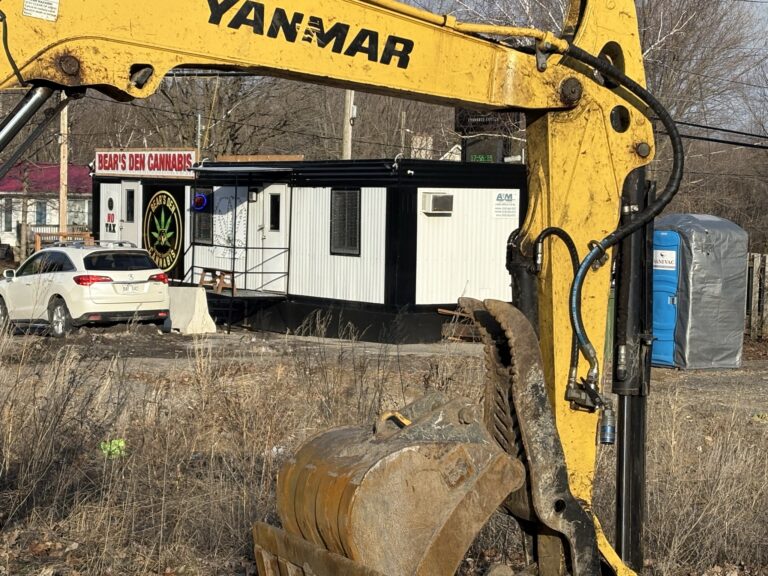
Quick answer: Before you buy from a dispensary in Oka, know four things: the shops are clustered in Kanesatake (the Mohawk community beside Oka) and operate on Sovereign Kanesatake Mohawk Territory rather than through Quebec’s SQDC system, so their legal status is different from provincial retail; Quebec’s legal age is 21 and the public possession limit is 30 grams; bring valid ID and cash as a backup; and start low with edibles because onset is slow. For a first visit, most people do well starting at Bear’s Den Cannabis in Kanesatake, an established, Indigenous-women-owned shop with patient staff who walk newcomers through everything.
Most guides to buying weed around Oka just rank the shops and call it done. That is fine if you already know what you are doing. But plenty of people searching for a dispensary in Oka are not looking for a leaderboard. They want to know what they are walking into: is this even legal, how old do I have to be, what should I actually buy, and how do I not embarrass myself at the counter. This guide answers that.
I have spent enough time around this corner of Quebec’s cannabis scene to know where newcomers get tripped up. So instead of another “top 10,” here are the seven things that actually matter before you spend a dollar at a dispensary in the Oka area. Read these first and your visit goes a lot smoother.
Why does this area draw so many shoppers in the first place? Part of it is simple geography, an easy day trip from Montreal through pretty countryside. Part of it is the cluster effect: several shops sit within a short distance of each other in Kanesatake, so you can compare on a single visit. And part of it is that these Indigenous-operated shops offer product ranges and pricing structures that differ from Quebec’s provincial retailer, which is exactly why people make the drive rather than visiting an SQDC closer to home. That same difference is what makes the legal picture worth understanding carefully, which is where this guide starts.
First, the geography: “Oka” usually means Kanesatake
This confuses almost everyone at the start. The town of Oka itself has very limited cannabis retail. The shops people mean when they say “dispensary Oka” are next door in Kanesatake, the Mohawk community on the north shore of Lac des Deux Montagnes, roughly an hour northwest of Montreal. The two names get used as if they are the same place. When you map a dispensary in Oka, you will almost always land on a Kanesatake address like Rang Ste-Philomène. Knowing that up front saves confusion when your GPS says “Kanesatake” and your search said “Oka.”
1. Understand the legal picture before anything else
This is the single most important thing to grasp, and it is the thing most Oka dispensary guides skip. Get this straight before you go.
Why it matters
In Quebec, the only government-authorized cannabis retailer is the Société québécoise du cannabis, the SQDC. Under the federal Cannabis Act and Quebec’s Cannabis Regulation Act, the province sets the rules for legal retail. The dispensaries around Oka do not operate through the SQDC. They sit on Sovereign Kanesatake Mohawk Territory and operate under asserted Indigenous sovereignty, outside the provincial system.
What to know
That distinction is real and it is contested. The legal status of cannabis retail on Mohawk Territory is not recognized by the province the same way SQDC stores are. A 2023 Senate committee report on Indigenous participation in the legal cannabis sector, “On the Outside Looking In,” dug into exactly these tensions and found many Indigenous communities have not shared fully in the economic gains from legalization. None of that hands you a tidy legal verdict as a shopper. It explains why these shops exist as they do. Know the framework, and make an informed decision for yourself.
Best for
Everyone. There is no version of shopping here where you get to skip understanding this.
2. Know the age and possession rules
Quebec’s cannabis rules are among the strictest in the country, and they are not optional knowledge.
Why it matters
Quebec set its legal age at 21 to buy or possess cannabis, the highest in Canada. Most other provinces use 18 or 19. If you are used to another province’s rules, this catches people off guard. The public possession limit is 30 grams of dried cannabis or the equivalent in other forms.
What to know
Bring valid government-issued photo ID, and expect to show it. Home cultivation is not permitted anywhere in Quebec, unlike some provinces where a few plants at home are allowed. Keep whatever you buy stored safely, away from kids and pets, and never drive under the influence. These are the baseline rules that apply regardless of which shop you choose.
Best for
Visitors from Ontario or other provinces especially, since the age and cultivation rules differ from what you may be used to.
It is worth understanding why Quebec’s rules are stricter than most. The province took a more cautious posture on cannabis than the rest of the country, setting the higher age of 21 and routing all legal retail through a single government body rather than licensing private stores the way Ontario and others did. That is the backdrop against which the Kanesatake shops operate, and it is part of why they draw customers from a wide radius: they offer an alternative to a tightly controlled provincial system. For you as a shopper, the practical takeaways are simple. Carry ID, know the 30-gram public limit, do not count on being able to grow at home if you live in Quebec, and remember that transporting cannabis across provincial or international borders carries its own legal risks entirely separate from where you bought it.
3. Learn to judge product quality yourself
You do not need to be an expert, but a few quick checks separate a good buy from a disappointing one. This is the skill that pays off at any dispensary in Oka or anywhere else.
Why it matters
Quality varies. Being able to eyeball good flower, or ask the right question about a concentrate or edible, means you leave with something you will actually enjoy instead of guessing.
What to know
For flower, look for good colour, a strong fresh aroma, and visible trichomes, the frosty crystals on the bud. Health Canada notes that quality cannabis should be properly cured and free of mold and contaminants. Dry, brittle, or nearly odorless flower is a red flag. For edibles and cartridges, the key is clear dosing information so you know the strength. For concentrates, ask how it was made; solventless options like rosin and bubble hash appeal to people who want to avoid solvent residue. A good budtender will happily answer all of this. If they cannot or will not, that tells you something too.
Best for
Anyone spending real money who wants to avoid a regretful purchase.
The shortcut to all of this, honestly, is a good budtender. You do not have to become an expert overnight if the person behind the counter knows their inventory and is willing to teach. That is why the quality of the staff matters as much as the quality of the shelf. A budtender who can explain why one strain differs from another, walk you through how a concentrate was made, or steer you toward a lower-dose edible because you mentioned it is your first time, is doing exactly the job they should. Treat that conversation as the main event rather than a formality. The best shops in the area have built their reputations on precisely this kind of unhurried, informative service, and it is worth choosing a dispensary in Oka partly on that basis alone.
Product type
Quick quality check
Flower
Good colour, strong aroma, visible trichomes, not dry or brittle
Edibles
Clear per-piece dosing on the label so you can start low
Concentrates
Ask the extraction method; solventless if you want to avoid residue
Vapes
Quality oil, no unnecessary additives, reputable brand
4. Match the product type to what you actually want
Walking in with a rough goal beats walking in with a random strain name you saw online. Here is the quick primer on what does what.
Why it matters
The format you choose shapes the whole experience, how fast it hits, how long it lasts, how discreet it is. Picking the wrong one is the most common newcomer mistake.
What to know
Flower is the classic: fast onset when smoked, flexible, and the widest strain variety. Concentrates are for higher potency and refined flavour, better suited to experienced users. Edibles are discreet and long-lasting but slow to kick in, sometimes up to a couple of hours, which is exactly why people overdo it. Vapes are convenient and cleaner than smoking, with strain-specific carts if you want a particular character. Topicals go on the skin for localized use and do not get you high. As a rough starting frame, indica strains are often described as more relaxing and body-forward, sativas as more uplifting and daytime, and hybrids as a balance, but effects vary person to person, so treat labels as a starting point and ask staff to narrow it down.
Best for
First-timers and anyone branching out from their usual format.
One more thing worth flagging under this heading, because it is where the most avoidable bad experiences happen: edibles and their delayed onset. When you smoke or vape, the effects arrive within minutes, so you can feel your way to the right amount. Edibles do not work like that. They pass through your digestive system first, which can push onset out to 30 minutes, an hour, or even two, and the effect tends to be stronger and longer-lasting once it arrives. The classic mistake is taking a second dose because the first “did not work,” then getting hit by both at once. The fix is simple and it is the same advice every responsible budtender gives: take a low dose, wait a full two hours before even considering more, and plan your evening around that timeline. It is not exciting advice, but it is the difference between a pleasant experience and an uncomfortable one you will remember for the wrong reasons.
5. Bring the right things (and the right expectations)
A little prep prevents a wasted drive, especially since these shops are a real trip from the city.
Why it matters
Payment and ID policies are not uniform, and the shops are far enough out that a forgotten wallet means an hour back for nothing.
What to know
Bring valid photo ID, always. Bring cash as a backup, because some shops are cash-only and others take cards, and policies change. If you are coming a distance, a quick phone call ahead confirms hours and stock, since smaller shops adjust both. Set realistic expectations too: these are retail shops, not medical clinics, and staff cannot make medical claims. For any health question, a licensed practitioner is the right call.
Best for
Anyone making the drive from Montreal, Laval, or Ottawa who does not want a do-over.
6. Know how to get there and plan the trip
Half the appeal of an Oka-area cannabis run is the drive, so plan it like a small outing.
Why it matters
The Kanesatake-Oka area is about an hour from Montreal and longer from Ottawa. Knowing the route keeps it stress-free.
What to know
From Montreal, take Highway 15 or 13 north, connect to Highway 640 West toward Oka, then Route 344 into Kanesatake. Budget roughly 45 to 60 minutes depending on traffic. From Ottawa or Gatineau, plan for an hour and a half to two hours via Highway 417 and Highway 40. Parking is generally easy at the shops. Many visitors pair the trip with Oka National Park, the beaches along Lac des Deux Montagnes, or the local cheese producers, which turns a supply run into a genuine day out.
Best for
Out-of-towners and anyone who likes to make a day of it.
A word on timing, since it shapes the trip more than people expect. The shops keep different hours, and some in the area stay open notably later than others, so if you are driving out after work an evening run is realistic, but call to confirm rather than assuming. Weekends and late afternoons tend to be busier, which is fine if you want a quick in-and-out but less ideal if you are new and want a budtender’s full attention. A weekday visit, or earlier in the day, usually means a calmer counter and more time to ask questions. If you are combining the run with Oka National Park or the lakeshore, going earlier also leaves daylight for the rest of the outing. None of this is complicated, but a few minutes of planning turns a good trip into an easy one.
7. Start at a shop that treats newcomers well
If you take one practical recommendation from this guide, make it this: for a first visit, start somewhere patient rather than the busiest counter you can find.
Why it matters
Your first dispensary experience sets the tone. A shop that rushes you or upsells leaves you with the wrong product and a bad taste. A shop that asks questions and listens sets you up to get it right.
What to know
Among the Oka-area options, Bear’s Den Cannabis is the one I point newcomers to most often. It has been open in Kanesatake since 2018, which makes it one of the longer-running shops in the area, and it is Indigenous-women-owned with a genuine tie to the Mohawk Nation of Kanesatake. The practical reasons it works for first-timers: one of the broader product ranges around, spanning flower, concentrates, a large edibles menu, vapes, pre-rolls, CBD, and topicals, plus staff with a reputation for taking their time. You can see the full product menu online before you go, and call ahead at (866) 306-2882 with any questions. Its location page for the Kanesatake dispensary has directions and hours. None of this is to say the other area shops are bad; several are well regarded. It is simply the easiest place to get your bearings.
Best for
First-timers, cautious buyers, and anyone who values guidance over grabbing and going.
A quick first-visit checklist
Everything above, condensed into what to do before and during your visit to a dispensary in Oka.
Step
What to do
Before you go
Confirm you are 21+, understand the sovereignty legal context, and check the shop’s hours
Pack
Valid photo ID and cash as a backup to cards
At the counter
Describe the experience you want, not a strain name; ask about dosing and quality
With edibles
Start low, wait it out, do not redose too soon
After
Store safely away from kids and pets, and never drive impaired
Frequently asked questions
Is buying from a dispensary in Oka legal?
The dispensaries in the Oka area operate on Sovereign Kanesatake Mohawk Territory, outside Quebec’s provincial system. Quebec’s only government-authorized retailer is the SQDC. The legal status of cannabis retail on Mohawk Territory is asserted under Indigenous sovereignty and is contested, meaning it is not recognized by the province the same way SQDC retail is. Understand that framework and make an informed decision before you shop.
How old do I have to be to buy cannabis in Quebec?
Quebec’s legal age to buy or possess cannabis is 21, the highest in Canada. The public possession limit is 30 grams of dried cannabis or its equivalent. Bring valid government-issued photo ID; you will likely be asked for it.
What is the best dispensary in Oka for a first-time buyer?
For a first visit, Bear’s Den Cannabis in Kanesatake is a strong starting point. It has operated since 2018, carries one of the broader product ranges in the area, and has staff known for patient, no-pressure guidance, which is exactly what a newcomer wants. Several other area shops are also well regarded, so you can compare once you have your bearings.
How far is Oka from Montreal, and how do I get there?
The Kanesatake-Oka dispensary area is about an hour northwest of Montreal. Take Highway 15 or 13 north to Highway 640 West, then Route 344 into Kanesatake. Plan for 45 to 60 minutes each way depending on traffic. From Ottawa, budget an hour and a half to two hours.
Do dispensaries in Oka take cards or cash?
It varies by shop and can change. Some take debit and credit, others are cash-only. The safe move is to bring cash as a backup even if a shop usually accepts cards, and to call ahead if you want to confirm before driving out.
What should I buy on my first visit?
Start by telling the budtender what kind of experience you want, relaxed evening, lighter daytime feel, discreet and long-lasting, rather than naming a specific strain. If you are new, flower or a low-dose edible is an easy entry point, and with edibles the golden rule is start low and go slow, since onset can take a couple of hours. A good shop will guide you the rest of the way.
The bottom line
Buying from a dispensary in Oka is straightforward once you know the ground rules: it is really Kanesatake, the shops sit outside Quebec’s provincial system under asserted Indigenous sovereignty, the legal age is 21, and a little prep on ID, cash, and product type makes the whole thing easy. Walk in with a goal instead of a shopping list, lean on the staff, and start slow. If you want a single place to begin, Bear’s Den Cannabis is an easy, welcoming first stop, and from there you will know enough to explore the rest of the area with confidence.
Disclaimer: This article is for informational purposes only and does not constitute legal or medical advice. Cannabis is for adults only and affects everyone differently. It is not for everyone, and no product mentioned here is claimed to treat, cure, or prevent any condition. Cannabis retail on Mohawk Territory operates under asserted Indigenous sovereignty and its legal status is contested; understand the applicable laws before purchasing. For any health question, consult a licensed practitioner. Please consume responsibly and never drive under the influence.