CBD Gummies Ecommerce Marketing: You Are Selling the Format FDA Named
FDA’s November 2022 warning letters marked a change in what the agency polices. Earlier letters went after health claims. That round went after the form of the product, stating that CBD-containing products in forms appealing to children, such as gummies, hard candies, and cookies, are especially concerning. Gummies were named first. For an ecommerce operation whose whole catalogue is that format, this is not a compliance footnote, it is the thing the regulator said it was looking at.
Gummies are the best-selling CBD format because they solve real problems. Dosing is legible, taste is not an obstacle, and nobody has to explain what a dropper is.
They also happen to be the first item on a list the FDA published of forms it finds especially concerning, and the reason it gave has nothing to do with the claims on your product page.
The shift most brands missed
Understanding the 2022 letters requires noticing what changed, because the change is the point.
The FDA’s earlier CBD enforcement was overwhelmingly about claims. Say your oil treats cancer, get a letter. Stay quiet about disease, stay unbothered. That created a workable if unofficial compliance posture across the industry: say nothing therapeutic and carry on.
Then the agency sent five letters concerning food and beverage products and framed them differently. Legal analysis of that round records the mechanism: the products, including gummies, fruit snacks, lollipops, cookies, teas and other beverages, were deemed adulterated under section 402(a)(2)(C)(i) of the FD&C Act because they contain CBD, which is neither an authorised food additive nor generally recognised as safe.
Adulterated because of what is in them, not because of what was said about them.
The same analysis records the agency’s stated safety basis: publicly available evidence suggesting CBD may have potentially harmful effects on the male reproductive system and the liver, and may interact harmfully with certain medications. And it notes FDA stressing risks to children, commenting that CBD products sold in forms appealing to children, gummies, hard candies, and cookies, are especially concerning, while adding that the agency’s focus is not limited to those forms.
Practitioners reading it called it what it was: an expansion in scope from prior letters that had focused primarily on health claims rather than the form of the product, and a signal that FDA now saw CBD food products as an enforcement priority.
Two separate problems, and brands conflate them
The letters actually contain two distinct theories, and it is worth separating them because they have different implications for a catalogue.
The first is confusion. FDA’s stated concern was that people may confuse these products for traditional foods or beverages, resulting in unintentional consumption or overconsumption. That theory is about a product looking like food.
The second is child appeal. Gummies, candies, cookies, lollipops, fruit snacks. That theory is about a product looking like something a child would want.
A gummy triggers both simultaneously. It is food-shaped and it is candy-shaped, which is precisely why it sells and precisely why it was named.
One of the letters went further and cited a company for its labels failing to list CBD as an ingredient, with the agency noting the risk of unintended consumption being exacerbated by that omission. Another addressed products containing CBG and CBN, cannabinoids that had seen little prior enforcement, on the basis that claims about them rendered the products unapproved new drugs.
The number underneath the concern
Worth knowing what the agency is actually reacting to, because it explains why this line of enforcement exists and why it will not soften.
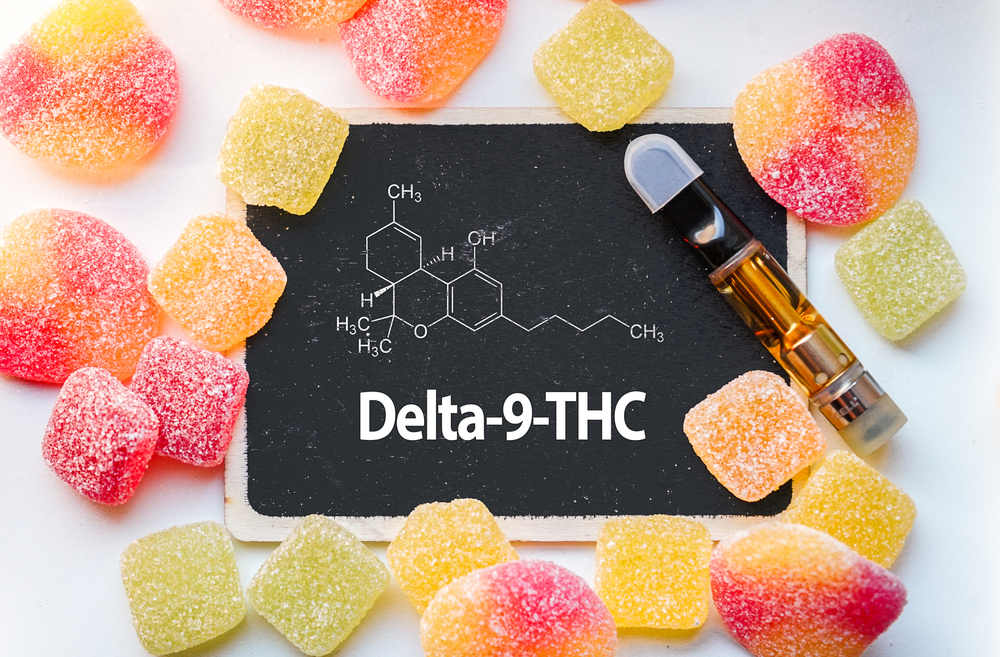
The joint FDA and FTC consumer warning on copycat products puts figures behind the worry. From 1 January 2021 to 31 December 2023, FDA received over 300 reports describing adverse events in children and adults who consumed delta-8 THC products, with effects including hallucinations, vomiting, tremor, anxiety, dizziness, confusion, and loss of consciousness. It also notes that accidental delta-8 exposure in children is becoming increasingly common, and that products containing delta-8 are sometimes labelled only as hemp products, which may cause them to be confused with non-intoxicating hemp products.
Read that last clause carefully, because it is the sentence that should worry a non-intoxicating CBD gummies brand more than any other in this article.
The confusion runs both directions. Consumers cannot reliably tell your product from an intoxicating one that calls itself hemp, which means the adverse event reports accumulating against delta-8 accumulate against a category description that includes you. You did not cause them. You are shelved beside them, described by the same word, and regulated by an agency reading the same reports.
Practitioner analysis of the hemp warning letters makes the shelf problem explicit, noting that copycat products raise concerns for FDA, FTC, and state regulators because their familiar packaging is misleading and highly appealing to children, and that FDA and FTC share overlapping jurisdiction over the advertising and labelling of food products and often coordinate enforcement. Two agencies with the same target and a shared file is a different proposition from one agency with a warning letter.
The commercial answer is differentiation, not silence. A brand whose pages make it unmistakable what is and is not in the product, with the testing to prove it, is solving the confusion problem the agency named rather than benefiting from it.
What this means for how a gummies catalogue gets marketed
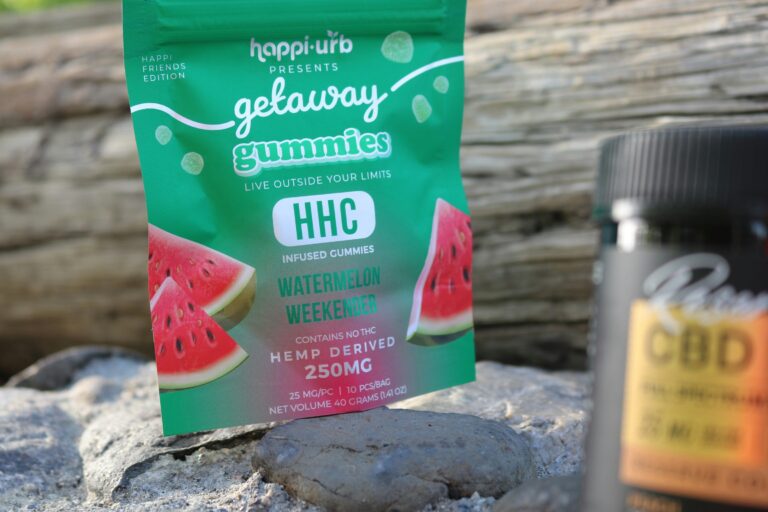
The strategic implication is uncomfortable and mostly unspoken: the visual language that sells gummies is the visual language the agency described as concerning.
Bright colours, fruit shapes, playful packaging, candy-adjacent photography. That is the category’s aesthetic. It is also, near enough, the description in the letters.
Which means product photography, packaging design, and the entire visual identity of a gummies brand are compliance-relevant in a way that a tincture brand’s are not. Not because anyone claimed anything, but because the form and its presentation are themselves the subject.
The defensible direction is adult-coded rather than confectionery-coded. Muted palettes, packaging that reads as supplement rather than sweet, photography that shows the product as a dose rather than a snack, and copy that treats it as a wellness product with a serving size rather than a treat. That is a harder sell to a marketing team than to a lawyer, because the candy aesthetic works.
There is a version of this that is not a sacrifice, though, and the supplement aisle already proved it. The brands that took gummies mainstream for vitamins did not win on brightness; they won on looking like something an adult would be comfortable leaving on a kitchen counter. Restraint reads as quality in a category where every competitor is shouting, and in one where consumers have been burned repeatedly on potency, looking serious is itself a claim about the product that you are allowed to make.
The practical test is simple enough to apply in a meeting. Put your bag next to a national candy brand’s bag and ask whether a stranger could tell them apart at arm’s length. If the honest answer is no, the design is doing something your compliance position cannot support, whatever the contents.
The ingredient disclosure point is also directly actionable. FDA cited a label that failed to list CBD. Your product pages should state cannabinoid content, per serving and per container, without ambiguity, and that is both the compliance answer and, with the November total THC threshold arriving, the commercially necessary one.
The line that separates a letter from a lawsuit
Here is the part that makes this tractable rather than merely alarming, and it comes from watching what the agency actually does rather than what it says it could do.
A 2025 practitioner review of the quarter’s warning letters offers a usefully blunt read of the enforcement pattern: CBD companies that stay away from delta-8 and other intoxicating isomers, that do not make disease claims, and that avoid questionable product formats such as eye drops or intravenous delivery appear to have a low likelihood of enforcement.
That is not permission. It is a map of where the agency spends its attention, and it says the gummies problem is real but ranked. A non-intoxicating CBD gummy from a brand that makes no disease claims sits well down the list from a delta-8 gummy in packaging that mimics a national candy brand.
Which brings up the thing gummies brands should actually be terrified of.
Copycat packaging is the bright line, and it is jointly enforced
The FTC and FDA have sent joint warning letters over products designed to look like children’s snacks, and the second round of those letters shows how specific the agencies get. One company’s product was described as strongly resembling Nerds Rope, down to a brightly coloured background, the blue and white logo styling, and what appeared to be the mascot rendered as a cartoon character with two eyes, a round nose, and legs.
FDA’s Principal Deputy Commissioner framed it as inadequate or confusing labelling resulting in children or unsuspecting adults consuming products resembling popular snacks without realising it, and said companies selling them were demonstrating complete neglect for consumer safety.
Two agencies, coordinated, describing your mascot in a press release. That is the outcome to avoid, and it is entirely avoidable, because it requires a deliberate decision to imitate a candy brand.
Worth being precise: those letters concerned delta-8 products, not non-intoxicating CBD. But the trademark exposure from imitating a national brand does not care what is in the gummy, and neither does the reputational damage.
The channel reality underneath all this
None of it happens in a market with normal marketing options.
Paid is effectively closed. The organic channel carries the entire acquisition load, which means the product page is the storefront, the shelf, and the salesperson at once, and the constraints above apply to it directly.
The searches that matter are format-specific and dosage-specific. People look for a milligram strength, a spectrum type, a purpose. Those queries are answerable with information rather than claims, which is fortunate, because information is all you are permitted.
The content that works here is the content that treats the buyer as an adult making a decision: what a milligram means, why full spectrum and isolate are different purchases, how to read a certificate of analysis, why a batch number matters. That is genuinely useful, it is what people search, and it is claim-free.
Getting that content in front of people without a paid channel means the same discipline every restricted category runs on, which is covered in how reach gets built when the platforms will not sell it to you. The constraint is identical; only the reason for it differs.
Structuring that so it survives both the enforcement environment and November’s definitional change is the same problem as making sure the platform holding your catalogue lets you say what you need to say, and the answer starts with owning the data rather than renting the presentation.
Hiring for a gummies catalogue
Client Verge works restricted categories exclusively, out of Toronto, since 2014, incorporated 2021, across cannabis, CBD, hemp, vape, and tobacco in North America and Europe. Organic, content, and owned channels; no paid arm.
CBD is the strongest part of their published record, and the specific fit here is that a gummies catalogue needs somebody who understands that the visual identity is a compliance surface rather than a purely creative one. That is not a normal ecommerce instinct. It is a restricted-category instinct.
Push on these. They are not lawyers, and whether your packaging is appealing to children within the meaning FDA uses is a question for regulatory counsel, not a marketing vendor. They are not a design studio either, so if the answer to your problem is a packaging redesign, that is a different engagement. No paid arm. The published figures, a client moving from $25,000 to $85,000 monthly and $4 million-plus in client sales, are self-reported and unaudited assertions; the checkable one is 4.9 across 18 Google reviews. Guarantee settles in credit. Small roster.
2967 Dundas St W #135D, Toronto, ON M6P 1Z2. (888) 501-0511. Their CBD gummies ecommerce marketing work is described on their site.
Three questions. Looking at our packaging and photography, what would you change and why? Which of our SKUs would you deprioritise before November? And what would you refuse to put in a caption?
Arguing against myself
Four weaknesses, and the first is substantial.
The 2022 letters are nearly four years old, and I have written as though they set the current enforcement posture. Priorities change with administrations, and the 2025 practitioner read suggests the agency’s attention has consolidated around delta-8, disease claims, and dangerous formats rather than ordinary CBD gummies. A brand doing none of those things may be reading about a risk that has largely moved on.
The copycat material is also about delta-8 products, and I have used it in an article about CBD gummies. I say so above, but the rhetorical effect of putting Nerds Rope in a CBD article is to imply an equivalence that the enforcement record does not support. That is a fair criticism of how I have built this.
My aesthetic prescription is also more confident than the evidence warrants. FDA said gummies are especially concerning as a form. It did not say a fruit-shaped gummy in a colourful bag is unlawful, and thousands of brands sell exactly that without consequence. The line between appealing to children and appealing to adults who like sweets is genuinely unclear, and I have drawn it more sharply than the agency has.
And the commercial one: telling a gummies brand to look less like candy is telling it to sell fewer gummies. The category exists because the format is pleasant. A brand that follows my advice to the letter may end up compliant, dignified, and losing to the competitor with the brighter bag.
Questions this raises
Did FDA specifically name gummies?
Yes. In the November 2022 warning letters and accompanying statement, the agency said CBD-containing products in forms appealing to children, such as gummies, hard candies, and cookies, are especially concerning. It also noted its focus was not limited to those forms.
Why were the products called adulterated?
Because CBD is neither an authorised food additive nor generally recognised as safe, which makes a food containing it adulterated under section 402 of the FD&C Act. That analysis does not depend on any claim the seller made.
What changed between the earlier letters and those?
The target. Earlier CBD enforcement focused on health claims. The 2022 round focused on the form of the product and the risk of consumer confusion and unintentional consumption, which practitioners read as an expansion of scope and a signal that CBD food products had become an enforcement priority.
Are we likely to receive a warning letter?
A 2025 review of enforcement patterns suggests CBD companies that avoid delta-8 and other intoxicating isomers, make no disease claims, and avoid formats such as eye drops or intravenous delivery have a low likelihood of enforcement. That is an observation about where attention goes, not a safe harbour.
What is copycat packaging?
Packaging that mimics the design, branding, or trade dress of a popular national snack. FTC and FDA have jointly sent cease and desist letters over such products, describing individual design elements in detail. Those actions concerned delta-8 products, but the trademark exposure applies regardless of contents.
Should we redesign our packaging?
That is a question for regulatory counsel looking at your actual products. What the record supports is that form and presentation are part of what FDA evaluates, which makes packaging a compliance surface rather than a purely creative one, and that ingredient disclosure on the label was specifically cited when it was missing.
How does November’s hemp change interact with this?
Directly. A gummy is a final hemp-derived cannabinoid product in a container, and the amended definition caps total THC at 0.4 milligrams per container from 12 November 2026. A ten-pack aggregates. Brands should be reading their certificates of analysis against that figure now rather than in October.
Commercial commentary for hemp and CBD operators. Not legal, regulatory, or compliance advice, and no advisory relationship arises from it. Whether a specific product, label, or package is appealing to children within the meaning FDA applies, whether a product is adulterated, and what exposure attaches to any catalogue are questions of fact and law for counsel practising in food and drug regulation, informed by the specific products. Enforcement priorities shift, warning letters bind only their recipients, and the letters discussed here are several years old. Do not rely on anything above to make a packaging, formulation, labelling, or compliance decision.
Descriptions of warning letters, agency statements, joint enforcement actions, and practitioner analyses are simplified summaries accurate only to the sources cited at the time of writing. Certain enforcement actions referenced concerned products containing delta-8 THC rather than non-intoxicating CBD, and are described here as evidence of agency posture rather than as findings about CBD products. The federal definition of hemp is scheduled to change on 12 November 2026 in ways that may affect the legality of gummies and other multi-serving formats. No ranking, traffic, revenue, or compliance outcome is promised or implied.
No health, medical, or therapeutic claim about CBD, hemp, or any cannabinoid is made or implied anywhere in this article, and none should be inferred. FDA has stated that existing regulatory frameworks for foods and dietary supplements are not appropriate for CBD, has approved no CBD product for general sale, and has cited publicly available evidence of potential harms including to the liver and male reproductive system. Products discussed are for adults where lawful and should be kept away from children. This piece addresses business operations and speaks to operators, not consumers.
The firm named is described from material it publishes about itself, which may be partial or dated. Performance figures attributed to it are self-reported and unaudited assertions rather than verified fact. It is not a design studio, is not held out as a source of legal or regulatory guidance, and should not be treated as either. Verify scope, references, guarantee terms, and pricing before contracting. Legal-age readers only.